AI FORMAT

How to Choose Keywords: Competition vs Volume in an AI Search World


One of the most common questions businesses still ask is:
“How do I choose the right keywords?”
Keywords still matter. But the more important question today is where your business should compete – and how clearly it can be understood.
As search and discovery increasingly involve AI-generated summaries and comparisons, choosing between competition and volume is no longer just about rankings. It is about whether your business can realistically be visible, credible, and correctly represented – including how AI systems interpret and summarise content.
Two factors remain central to that decision:
- Competition
- Volume
In an AI-driven search environment, these factors influence not just rankings, but whether your business is selected, summarised, or ignored when answers are generated.
Choosing the right keywords – and the right level of competition – can be the difference between attracting meaningful business and investing time and money into a digital strategy that goes nowhere.
What does competition mean in digital marketing?
Any experienced digital marketing team will pay close attention to competition when selecting keywords as part of an SEO or visibility strategy.
Keyword competition indicates how many other pages are trying to appear for the same search term. It is an indirect measure of how difficult it will be to gain meaningful visibility for that keyword.
High competition usually means:
- More pages targeting the same terms
- Frequent ranking fluctuations
- Large competitors with established credibility
All of this makes it harder for smaller or more specialised businesses to gain traction.
As a general rule, broad and generic searches tend to be the most competitive. Unless your site already has strong credibility and clear topical relevance, it is often better to avoid these initially.
Competition matters more when AI interprets results
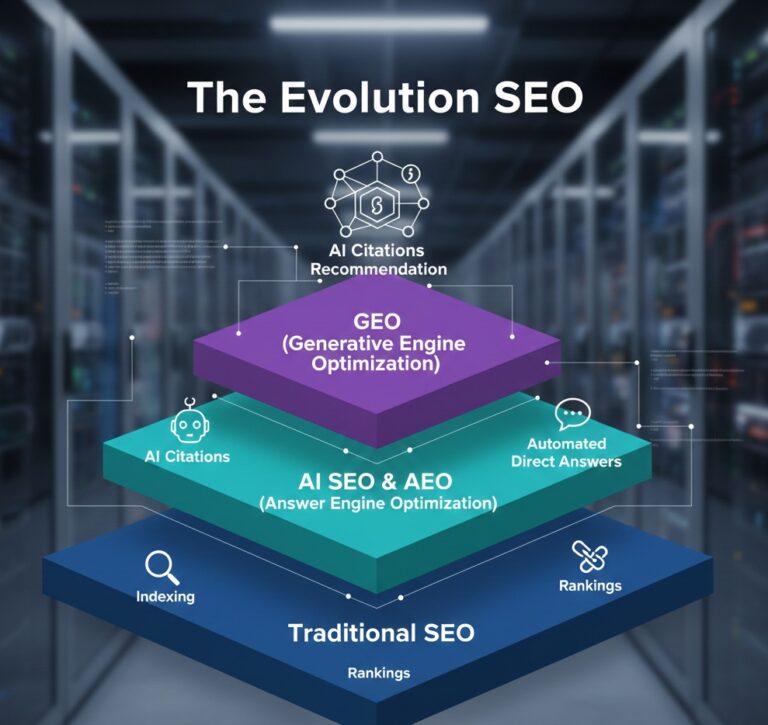
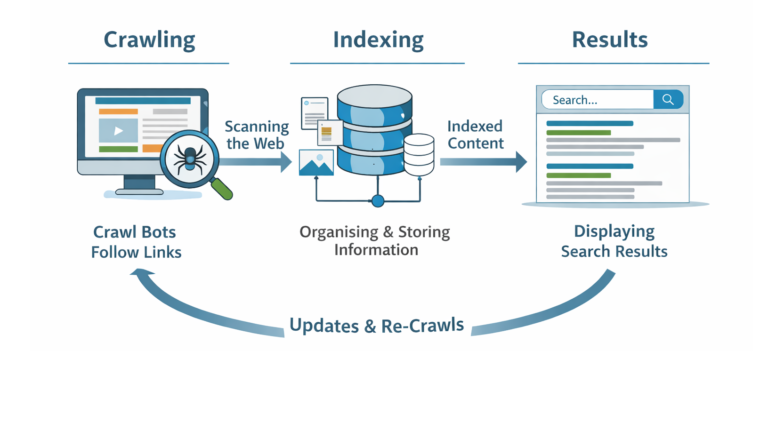
Search engines no longer simply list pages. Increasingly, they interpret, summarise, and compare information before showing results to users, based on systems designed to surface helpful and reliable information.
In highly competitive spaces where many businesses say similar things, AI systems can struggle to determine what genuinely differentiates one option from another. Clear positioning and realistic competition make it easier for AI systems to understand what your business actually offers.
This means choosing where to compete is no longer just an SEO decision. It is part of a broader visibility strategy grounded in approved business knowledge, where clarity and accuracy matter as much as reach.
Page authority vs domain authority
Page authority refers to the credibility of an individual page. Search systems assess this based on relevance, clarity, and how that page connects to other trustworthy information.
Domain authority applies this idea across an entire website. Established sites such as government bodies, news organisations, and reference platforms are often seen as more credible due to their consistency and history.
Improving overall site credibility comes from:
- Clear, accurate content
- Logical structure
- Strong internal and external links
It does not come from chasing metrics alone.
What does search volume mean?
Search volume refers to how often a keyword or phrase is searched, usually per month.
Volume can vary significantly depending on:
- Location
- Seasonality
- Industry
For example, search interest in Christmas decorations peaks in December, not April. Location matters too – people in Victoria are unlikely to search for cyclone warnings, while someone in Darwin might.
Higher search volume can mean more potential visibility. But volume alone does not guarantee value. Ranking first for a keyword that only a handful of people search each month is unlikely to drive meaningful outcomes.
This is why keyword analysis must always consider intent and realism, not just numbers.
Which matters more – competition or volume?
Whether you are planning SEO or paid campaigns, the goal is to find the right balance.
High-volume keywords are tempting. More searches suggest more exposure. But when competition is too strong, visibility becomes unrealistic and effort is often wasted.
Visibility is not just about being found.
It is about being understood.
In practice, the most effective keywords are those that are:
- Relevant to your offering
- Realistic in terms of competition
- Clear in intent
One way to reduce competition is to focus on more specific, long-tail keywords. Adding meaningful detail lowers competition and clarifies intent.
For example, a broad term like “SEO agency” is extremely competitive. Adding context such as “SEO agency in Melbourne” narrows the field and improves relevance.
Choosing where to compete is a strategic decision
Competition and volume should never be viewed in isolation. They are part of a broader content and visibility strategy that determines how your business is positioned and represented online.
As discovery continues to evolve, businesses that prioritise clarity, intent, and realistic competition are better placed to achieve sustainable visibility – both in traditional search results and in AI-generated answers.
About the Author

Declan Reynolds is the Founder and Director of AI Format and a digital marketing specialist with over 28 years of experience in SEO, web design, and AI-driven marketing. He works with established businesses across Australia to improve how they are found, understood, and recommended — by both search engines and AI platforms.
Learn more about Declan

Declan Reynolds
Articles: 115
Running for...
19 Yrs
We've lasted through industry change and now we embrace AI to last the next 19 years.
Boutique AI Agency...
7 Experts
We're a boutique agency using focused on a limited number of clients to get big results.
Long Relationships...
10+ Yrs
We have clients that have been using our SEO services for 10 years... TEN.
Search Specialists...
15 Yrs
We started as web developers but switched to focus on Search 15 years ago.
Certified
In AI
We've invested heavily in training staff in AI so you feel confident we're doing it right.