AI FORMAT

The evolution of SEO — and What Businesses Need to Do Next

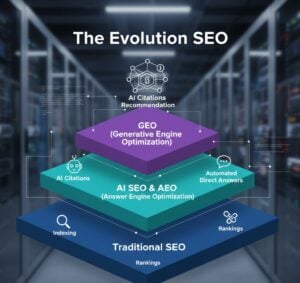
Executive Summary
Search hasn’t replaced SEO — it has expanded it.
SEO is still essential for getting your website indexed, ranked, and trusted. But modern search now includes AI-generated answers, summaries, voice search, and recommendations that often appear before users ever click a website.
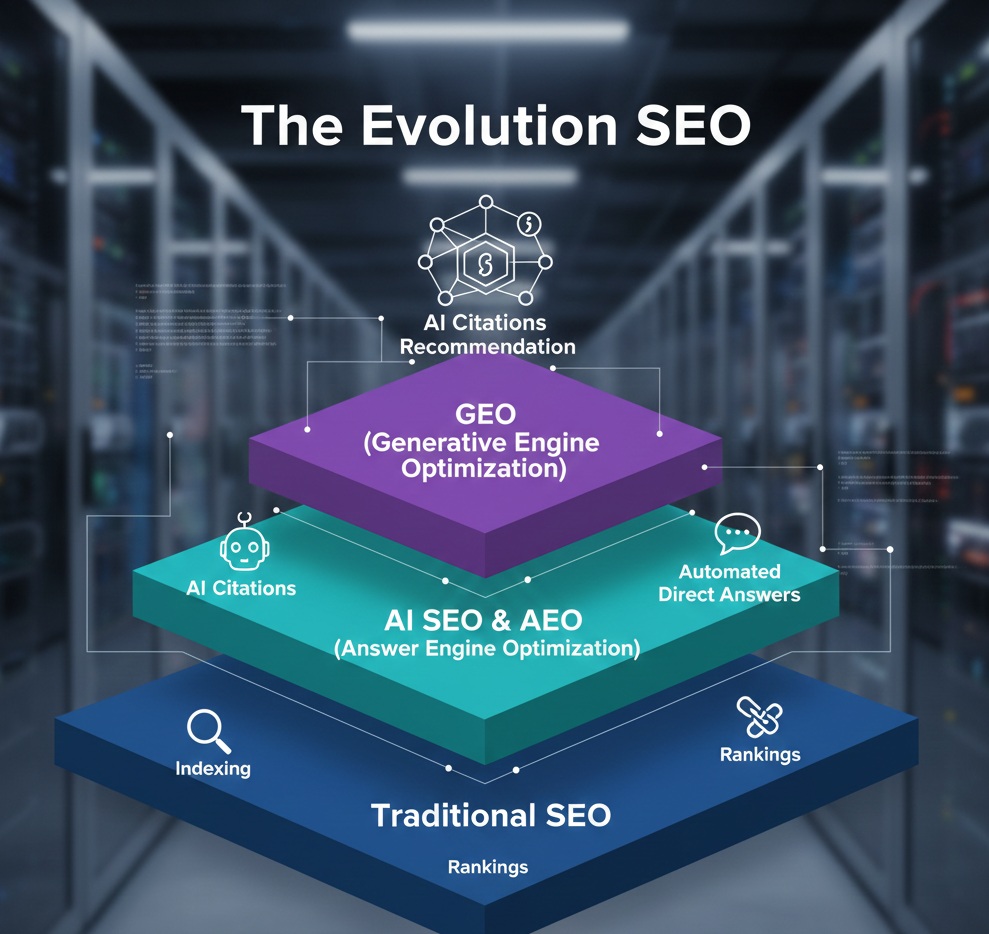
AI SEO improves how SEO work is executed, allowing businesses to adapt faster and maintain visibility as search evolves. AEO ensures your content is selected as answers, while Generative Engine Optimisation (GEO) prepares your business to be accurately represented and recommended by AI systems.
Together, SEO, AI SEO, AEO, and GEO form a long-term strategy designed for how people — and AI — now search.
Search engine optimisation has never stood still — but the pace of change has accelerated dramatically in recent years.
What once revolved around keyword matching and rankings is now shaped by generative AI, AI Overviews, voice search, and systems designed to interpret intent rather than simply match terms. As a result, businesses need to rethink how SEO works, what it includes, and how it connects to the future of digital marketing.
SEO hasn’t disappeared.
But it has expanded.
To understand where search is heading, it helps to look at how SEO evolved — and why AI SEO, AEO, and Generative Engine Optimisation (GEO) now play a critical role.
What SEO Is — and Why It Still Matters
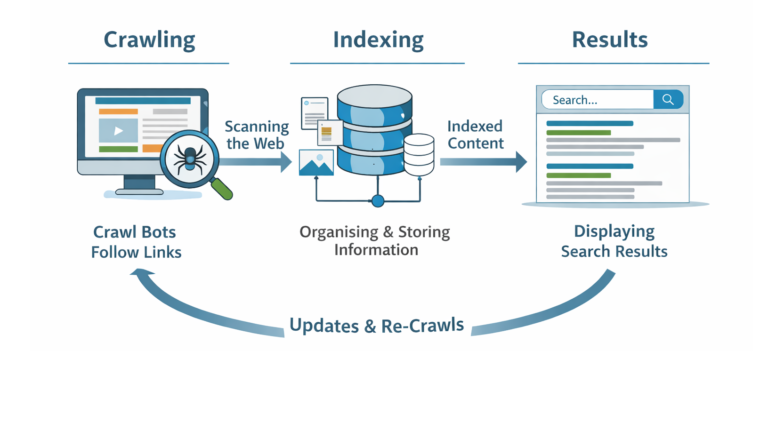
SEO is the process of helping search engines index and rank your web pages accurately.
At its core, SEO ensures that:
- Your site can be crawled and indexed
- Your content aligns with real search queries
- Your pages load quickly and function well
- Search engines understand what each page is about
Strong SEO strategies still drive:
- Organic traffic
- Visibility across Google Search and Google Maps
- Performance of Google Business Profiles
- Long-term discoverability
This is achieved through a combination of keyword research, technical SEO, content optimisation, structured data, and authority signals.
If your business has invested in SEO in the past, that work was not wasted. SEO remains the foundation on which all modern search visibility is built.
Why Traditional SEO Alone Is No Longer Enough
Search results are no longer just lists of links.
Today’s search environment includes:
- AI Overviews and summaries
- Featured answers
- Local packs and maps
- Voice search responses
- AI-generated recommendations
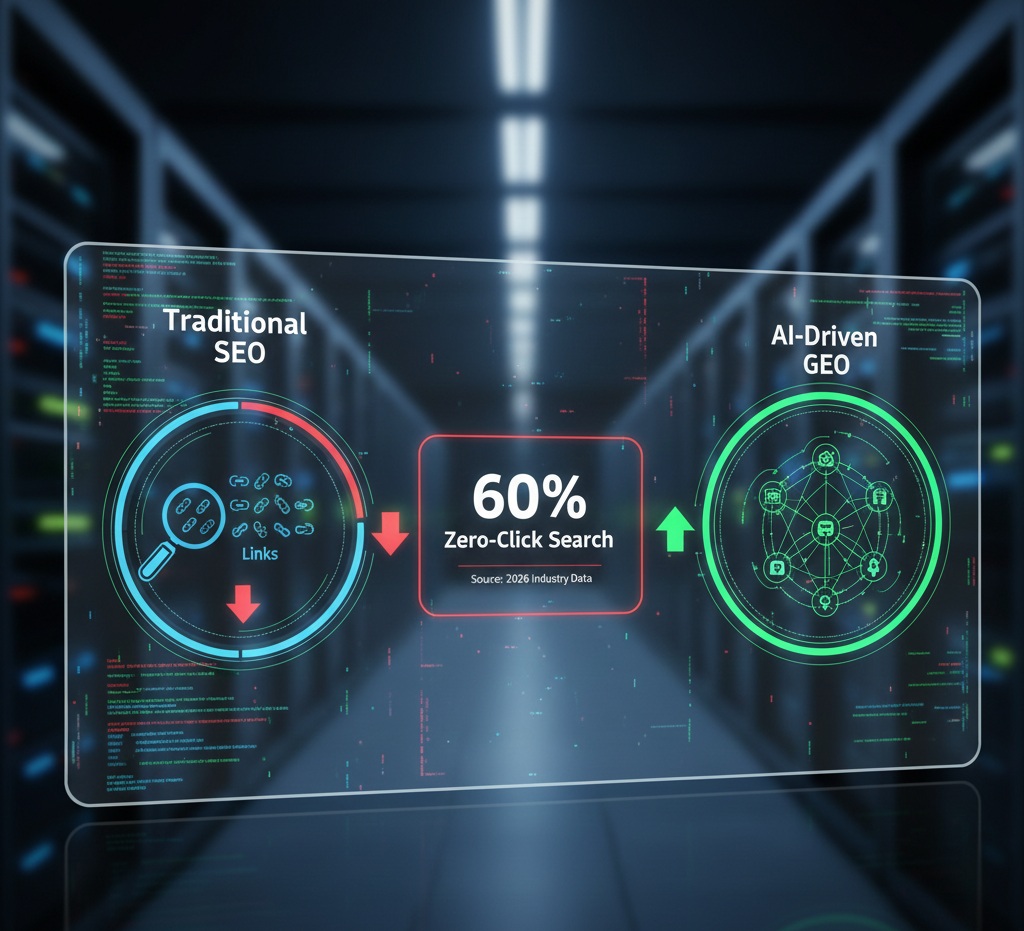
In many cases, users get answers without clicking through to a website at all. This has a direct impact on click-through rate, even when rankings remain stable. Recent data shows that 60% of searches now end without a single click due to the rise of AI summaries. According to a 2026 search study by AIOSEO, this shift is a primary driver for why traditional SEO must now expand into GEO to maintain brand influence when no click occurs.
This explains why many businesses experience:
- Flat or declining traffic
- Lower enquiry volume
- Reduced conversion despite ranking well
Traditional SEO was designed to optimise for rankings and keyword matching — not for AI-mediated decision-making or zero-click environments.
SEO still matters.
But it no longer captures the full search journey on its own.
How Search Engines Actually Work Today
Modern search engines evaluate thousands of ranking factors, far beyond keywords alone.
These include:
- Page relevance and intent alignment
- User experience (UX) signals
- Core Web Vitals (speed, stability, responsiveness)
- Structured data and schema markups
- Internal linking and site structure
- Content clarity and authority
- Engagement metrics and behaviour patterns
Search engines now aim to understand meaning, not just terms. A single search query can trigger multiple interpretations depending on context, location, and intent.
This shift laid the groundwork for AI-assisted search.
What AI SEO Actually Means
AI SEO is the use of artificial intelligence to improve how SEO is executed — not to replace strategy or human oversight.
AI SEO helps:
- Analyse large datasets quickly
- Identify patterns across web pages and competitors
- Cluster keywords by intent instead of exact matching
- Detect gaps in content coverage
- Continuously optimise pages over time
In practice, AI SEO allows SEO strategies to adapt faster to:
- Algorithm updates
- Competitive changes
- Shifts in user behaviour
This makes SEO more efficient, more responsive, and more scalable — especially for businesses focused on long-term growth rather than short-term wins.
Why Traditional SEO Workflows Fall Behind
Many legacy SEO approaches still rely on:
- Static keyword lists
- Manual audits
- One-off optimisation
- Reactive updates
This makes them slow to adapt in an environment where:
- Ranking factors change frequently
- AI systems rewrite how results are presented
- Content expectations continue to rise
AI SEO addresses this execution gap — but it’s not the final evolution.
What Is AEO (Answer Engine Optimisation)?
As users shift from typing keywords to asking questions, visibility increasingly depends on whether your content is selected as an answer.
AEO focuses on:
- Structuring content to respond directly to questions
- Improving clarity and topical relevance
- Aligning content with conversational and voice search behaviour
This is particularly important for:
- Informational searches
- Service explanations
- Cost and comparison queries
AEO ensures your content is surfaced when users seek answers — not just when they browse links.
From SEO to AI SEO, AEO & GEO
What Is Generative Engine Optimisation (GEO)?
Generative Engine Optimisation (GEO) addresses a newer challenge: how generative AI systems decide which businesses to mention, summarise, or recommend.
GEO focuses on how AI systems:
- Interpret your business model
- Assess trust and authority
- Decide what information to include or exclude
This requires additional work beyond SEO and AI SEO, including:
- Structuring business knowledge clearly
- Using structured data and schema markups
- Controlling how services, locations, and expertise are described
- Reducing ambiguity or misrepresentation
GEO sits on top of SEO, not instead of it — and is essential as more decisions happen inside AI interfaces rather than search results pages.
Why Modern SEO Is Now a System, Not a Tactic
Modern SEO is no longer a checklist. It’s an interconnected system that spans:
- Keyword research and intent mapping
- Content strategy and content creation
- Technical SEO and Core Web Vitals
- UX optimisation and page performance
- Structured data and schema markups
- Authority signals and trust building
- Local SEO and Google Maps visibility
- AI-driven interpretation and recommendation
Each element supports the others. Weakness in one area limits performance across the whole system.
This is why SEO now overlaps heavily with broader digital marketing — including content, UX, and even social media, which supports visibility and authority rather than replacing search.
Voice Search, AI Interfaces, and the Next Layer of Search
Search is no longer limited to screens.
Voice search, AI chat interfaces, and AI voice agents increasingly shape how users discover information. These systems rely on the same structured, accurate business knowledge used for AI SEO and GEO.
If your content isn’t clear, consistent, and well-structured, AI systems may:
- Skip your business
- Misinterpret your services
- Recommend competitors instead
This makes structured data, clarity, and trust more important than ever.
The Future of SEO: What Businesses Should Focus On
The future of SEO is not about doing more work — it’s about doing better, connected work.
To remain competitive long-term, businesses need to:
- Move away from static SEO plans
- Focus on continuous optimisation
- Improve existing content regularly
- Monitor performance more closely
- Adapt faster than competitors
AI makes this level of optimisation achievable without proportionally increasing cost.
The Key Takeaway: GEO and SEO
SEO is still essential.
But modern search requires more than keyword matching and rankings alone.
AI SEO improves how SEO work is executed.
AEO ensures your content is selected as answers.
Generative Engine Optimisation (GEO) prepares your business for AI-driven recommendations.
Together, they form a long-term search strategy built for how people search — and how AI now decides what gets seen.
FAQ
Is SEO still worth investing in?
Yes. SEO is still the foundation of online visibility. It allows your website to be indexed, ranked, and trusted by search engines. Without SEO, newer strategies like AI SEO, AEO, and GEO cannot work effectively.
What is the difference between SEO and AI SEO?
SEO focuses on improving rankings and organic visibility.
AI SEO improves how SEO work is executed by using artificial intelligence to analyse data faster, adapt strategies continuously, and optimise content at scale.
What is Generative Engine Optimisation (GEO)?
Generative Engine Optimisation (GEO) focuses on how AI systems interpret, trust, and recommend businesses within AI-generated answers, summaries, and recommendations — not just traditional search results.
Why are businesses getting fewer clicks even when rankings stay the same?
Because users increasingly get answers directly from AI Overviews, featured answers, and local results without clicking through to websites. This affects click-through rate even when rankings remain stable.
Is AI SEO suitable for small service businesses?
Yes. AI SEO helps small businesses stay visible in competitive markets by improving execution efficiency, supporting local SEO, and preparing content for AI-driven search experiences.
About the Author

Declan Reynolds is the Founder and Director of AI Format and a digital marketing specialist with over 28 years of experience in SEO, web design, and AI-driven marketing. He works with established businesses across Australia to improve how they are found, understood, and recommended — by both search engines and AI platforms.
Learn more about Declan

Declan Reynolds
Articles: 115

Running for...
19 Yrs
We've lasted through industry change and now we embrace AI to last the next 19 years.
Boutique AI Agency...
7 Experts
We're a boutique agency using focused on a limited number of clients to get big results.
Long Relationships...
10+ Yrs
We have clients that have been using our SEO services for 10 years... TEN.
Search Specialists...
15 Yrs
We started as web developers but switched to focus on Search 15 years ago.
Certified
In AI
We've invested heavily in training staff in AI so you feel confident we're doing it right.